
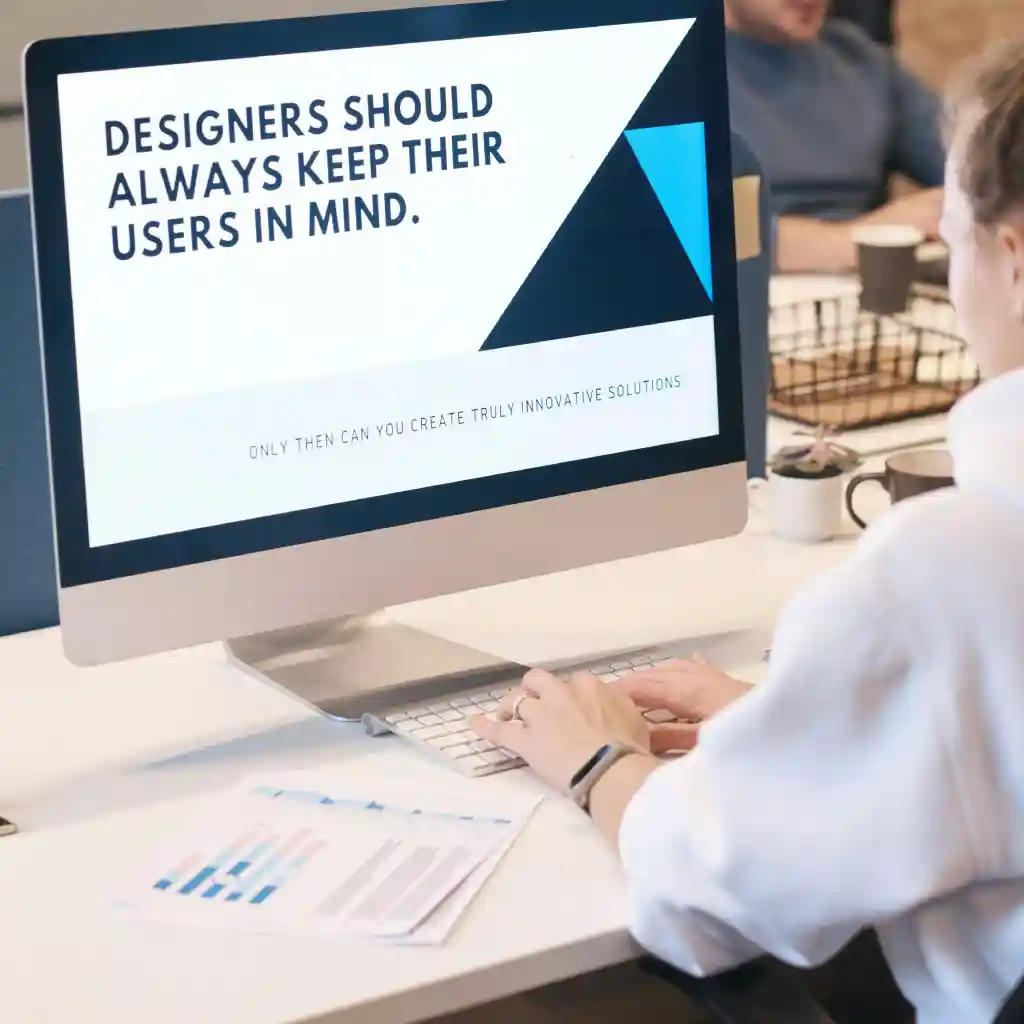
DOOD delivers professional Web UX Design services for businesses in Hong Kong that want digital interfaces built around how people actually behave — not how we assume they do. Our Web UX Design process starts with evidence: user research, behavioural analysis, and competitive benchmarking that establish a clear picture of what your audience needs before a single screen is sketched. From that foundation, we design interfaces that reduce friction, guide decisions, and convert visits into actions. Every Web UX Design engagement we undertake is tied to measurable outcomes — lower bounce rates, higher time-on-site, and improved conversion performance across devices.
Good UX design is invisible to the end user. When navigation feels natural, content loads fast, and calls to action appear in the right place at the right moment, users move through a site without friction or confusion. Achieving that requires disciplined design thinking, structured testing, and close collaboration between design, development, and content teams. Our Web UX Design practice integrates directly with our website design and digital strategy capabilities, ensuring user experience decisions are grounded in business objectives and audience insight from the start.
Web UX Design Services in Hong Kong
User Research and UX Strategy
Effective Web UX Design begins with understanding the people who will use your site. We conduct structured user research including audience segmentation, behaviour mapping, and task flow analysis to identify where existing interfaces fail and where opportunities for improvement exist. This research feeds directly into a UX strategy that prioritises design decisions by their impact on user goals and business performance. We use our target audience analysis and market research frameworks to ground design in data rather than opinion — a discipline that becomes especially important for Hong Kong businesses serving multilingual, multicultural audiences across desktop and mobile environments.
Our UX strategy deliverables include user journey maps, information architecture recommendations, and interaction flow diagrams that give development and content teams a shared reference point before design work begins. This upfront investment reduces revision cycles, eliminates structural rework mid-project, and ensures the final interface reflects how users navigate rather than how stakeholders imagine they do. The strategic layer of our design practice is what separates purposeful design from aesthetically polished but functionally weak websites.
Interface Design and Interaction Patterns
Our Web UX Design team translates research and strategy into interfaces that are clear, consistent, and purposeful. We design component systems — navigation structures, form patterns, content hierarchies, and interactive elements — that work cohesively across the full site rather than in isolation. Visual design decisions are made in service of usability: typography choices improve readability, colour contrast meets accessibility standards, and layout grids create predictable structures that users learn quickly. Our designers work closely with our corporate website design and WordPress website design teams to ensure visual and functional quality are achieved in tandem.
Interaction design is a core part of our approach. We define hover states, transition behaviours, loading patterns, and micro-interactions that make interfaces feel responsive and alive without adding unnecessary complexity. These details matter because they communicate system status to users, reduce uncertainty during multi-step processes, and create a sense of quality that reflects on the brand. For high-traffic pages, product listings, and checkout flows, interaction quality has a measurable effect on completion rates — which is why we treat it with the same rigour we apply to layout and structure.
Web UX Design for Performance, Accessibility, and Conversion
A well-designed interface that loads slowly or excludes users with accessibility needs is not a complete solution. Our Web UX Design work incorporates performance considerations throughout — designing asset-efficient layouts, specifying optimised image formats, and structuring content in ways that support fast rendering across connection speeds. We align UX decisions with Core Web Vitals metrics including Largest Contentful Paint (LCP), Cumulative Layout Shift (CLS), and Interaction to Next Paint (INP), ensuring the designed experience holds up under technical measurement as well as subjective user feedback.
Accessibility is built into our design process, not retrofitted at the end. We follow WCAG guidelines for contrast ratios, keyboard navigation, focus management, and semantic structure — practices that improve usability for all users, not just those with specific requirements. This commitment to accessible design also supports our SEO performance work, since search engines increasingly reward well-structured, accessible interfaces. Conversion-focused design decisions — clear call-to-action placement, reduced form friction, and logical page flow — are validated through our content structure reviews and iterative testing cycles.
Web UX Design for E-Commerce and Custom Platforms
E-commerce interfaces carry the highest UX stakes — a confusing product page or a broken checkout flow directly costs revenue. Our Web UX Design practice for e-commerce covers the full purchase journey: product discovery, filtering and search, product detail pages, cart management, and checkout completion. We design these flows with drop-off prevention as a primary objective, applying pattern analysis and user testing to identify where intent breaks down and purchases are abandoned. Our work integrates naturally with our e-commerce website design and e-commerce development services, creating a joined-up process from UX specification through to production deployment.
For custom platform projects built on WordPress, Laravel, or bespoke architectures, our design team works alongside developers from the earliest stages to ensure interface requirements are technically feasible and implementation decisions do not compromise the user experience. Design systems we produce — component libraries, spacing tokens, interaction guidelines — are handed to development teams in formats that support accurate, efficient build. This reduces the gap between designed intent and built reality, a gap that is responsible for a large proportion of UX degradation on live sites. Our editorial website design projects follow the same discipline, applying UX rigour to content-heavy environments where readability and navigation clarity are the primary conversion drivers.
Real-world implementation example: A Hong Kong professional services firm engaged DOOD for a full Web UX Design review of their existing site after analytics revealed high exit rates on key service pages. Following user journey mapping, information architecture restructuring, and interaction redesign, average session duration increased by 47% and enquiry form completions rose by 38% within three months of launch. The project demonstrated how structured UX methodology — rather than visual restyling alone — produces sustainable improvements in site performance and business outcomes.
Examples of websites built using our UX design methodology:
- https://law.asia
- https://bainmariehk.com/
- https://williamsoneducation.com/
- https://hanayama-toys.com/
- https://vee.com.hk
- https://seafoodsociety.hk
- https://jpsgallery.com
- https://erlicht.com
- https://lookdiary.com.hk/
- https://boneato.hk
- https://theboater.hk
- https://ewig-int.com/
- https://sinogo.com
- https://hospicebridge.org
- https://touyunbiotech.com.hk
- https://monsieurchatte.com
- https://maylau.com/
- https://childfocus.com.hk
- https://sinovantagewines.com
- https://sauvesparlekong.com
- https://munros.com.hk/
- https://ifisource.com/
- https://mkwong.com.hk/
Related articles: